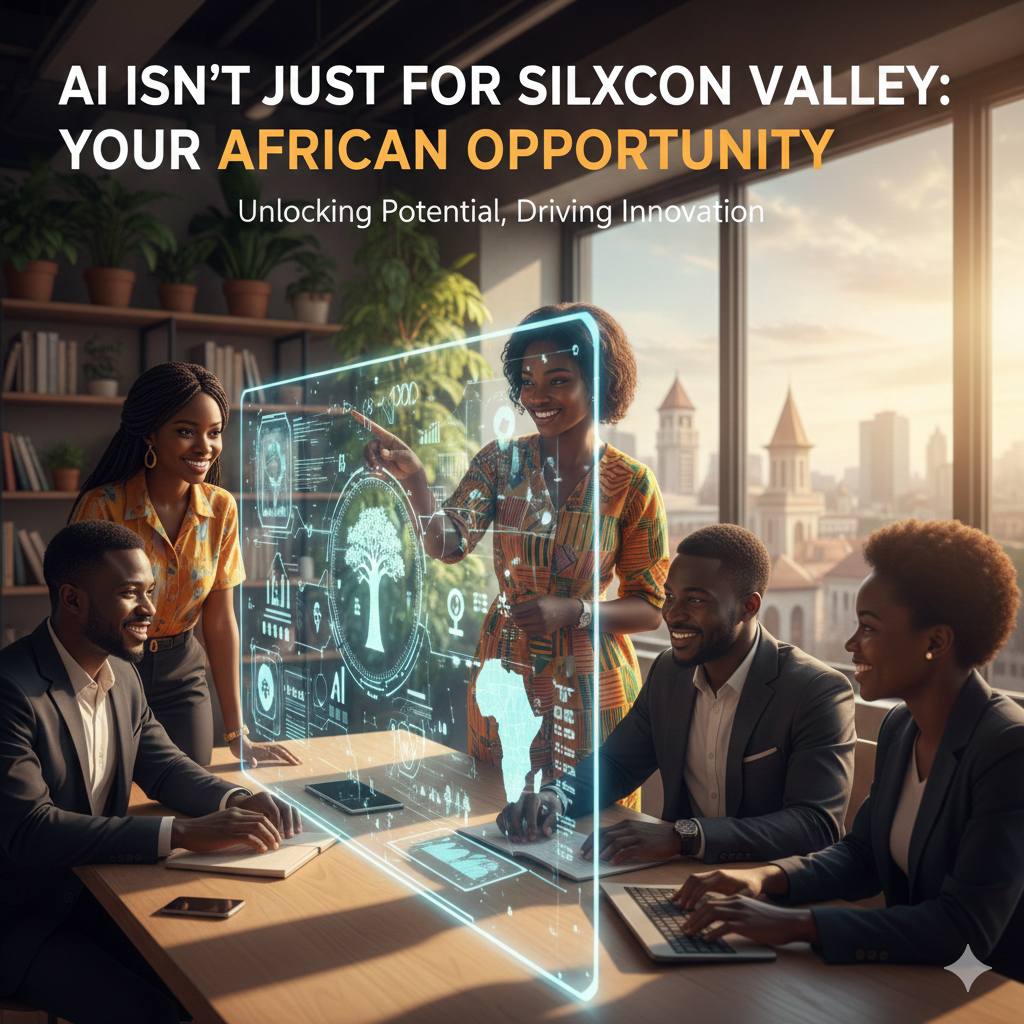
AI Isn't Just for Silicon Valley: Your African Opportunity
A common misconception holds that Artificial Intelligence is a monolithic force designed elsewhere, destined to displace jobs here without offering new ones. This view misses the fundamental truth: AI is a toolkit, and its economic value is unlocked by those who learn to wield it within their own context. The massive capital flowing into AI from figures like Musk and Zuckerberg isn't creating a single, centralized industry; it's funding an explosion of tools and platforms that require skilled operators globally—including in Accra, Lagos, and Nairobi.
The Problem: Passive Observation in an Active Revolution
The digital economy in Africa is evolving at breakneck speed, yet a skills gap threatens to leave many as passive consumers rather than active builders. The problem isn't a lack of opportunity; it's the pace of change. While global giants invest billions, local businesses—from agritech startups to fintech firms—are scrambling to integrate AI for customer service, data analysis, and process automation. They need talent that understands both the technology and the local market nuances. Watching this revolution unfold without acquiring relevant skills is the professional equivalent of seeing a tro-tro pull away while you're still counting your coins.
The Solution: Building Contextual AI Competence
The solution lies in moving from theoretical awareness to applied competence. This doesn't require a PhD from abroad; it requires focused vocational training on the specific tools and applications reshaping African industries.
For instance: A marketing professional in Kumasi can learn to use AI-powered analytics platforms to understand consumer trends across Ghana better than any generic global tool could predict. An operations manager for a logistics company can master automation software to optimize delivery routes across Accra's unique traffic patterns, saving fuel and time.
Practical steps for Ghanaians:
- •Identify the Adjacent Skill: Don't aim to "learn AI." Aim to learn how AI enhances your current role or target industry. A graphic designer should master AI image generation tools (like Midjourney or DALL-E) for rapid prototyping. An accountant should focus on AI-driven financial analysis software.
- •Seek Localized Training: Look for courses that frame lessons within African business case studies. How does one prompt an AI chatbot effectively for customer service in Twi or Pidgin? How can data analytics be applied to Ghanaian sales figures? Institutions like Tledu Ghana are building curricula that answer these exact questions.
- •Start with Platforms, Not Theory: Engage directly with accessible tools. Use Canva's Magic Write for content creation, explore Otter.ai for transcribing meetings, or try Google's Gemini for brainstorming campaign ideas tailored to Ghanaian festivals.
The Result: Career Sovereignty in a Digital Age
The result of this targeted upskilling is career sovereignty—the ability to dictate your professional value rather than having it dictated by technological shifts. You become the indispensable bridge between powerful global technology and local economic needs.
Consider real examples:
- •A graduate from Tledu Ghana’s Data Analytics program might help a Kasoa-based retailer use sales prediction models to manage stock during seasonal peaks like Christmas or Ramadan, drastically reducing waste and increasing profit.
- •A professional who learns prompt engineering could build custom chatbots for Ghanaian banks, handling routine customer inquiries about mobile money transactions more efficiently than overloaded call centers. These roles aren't speculative; they are emerging needs driven by local companies adopting global tools.
Beyond Hype: The Infrastructure of Intelligence
The billions invested by Meta and others are building the infrastructure—data centers, cloud computing networks—that makes these tools accessible worldwide at lower costs. This democratization means the barrier to entry isn't expensive hardware; it's specialized knowledge. Africa’s young demographic isn't a liability but an asset if coupled with the right digital skillset focused on implementation and management of these systems.
Your Move: From Spectator to Participant
The narrative that technology happens to us is obsolete. For professionals in Ghana’s evolving economy, the choice is clear: remain a spectator of the AI-funded gold rush or become a prospector equipped with modern tools. This begins with rejecting passivity and committing to structured learning that connects global capability with local opportunity.Don't just watch where the money flows; position yourself where value will be created. Explore how Tledu Ghana’s practical courses in Digital Marketing (with AI content modules), Data Science & Analytics (applied business intelligence), or Business Technology (process automation) can provide you with precisely this toolkit.
TLedu Ghana
Author at Tledu Ghana
Comments (0)
No comments yet. Be the first to share your thoughts!